
Acute vs Chronic Inflammation and What to Eat
Not all inflammation is the same, and understanding the difference changes how you eat to support your body. When people search for acute inflammation treatment, they are usually thinking about a recent injury or flare-up, where food plays a supporting role alongside rest and any care your provider advises. Chronic inflammation is a different story, one where your daily plate becomes the main event. This guide explains acute versus chronic inflammation in plain language, then walks through exactly what to eat for each.
What is acute inflammation?
Acute inflammation is the helpful, short-term kind. When you twist an ankle, catch a cold, or nick your finger, your body floods the area with immune cells, fluid, and repair signals. That is the redness, warmth, and swelling you can see and feel, and it is a sign your body is doing exactly what it should. As the National Library of Medicine overview of acute inflammation explains, this response typically resolves within days as healing completes.
The goal with acute inflammation is not to shut it down, but to support recovery. Good nutrition, rest, hydration, and appropriate care help your body finish the repair work and return to normal.
What is chronic inflammation?
Chronic inflammation is the opposite in almost every way. Instead of resolving in days, it lingers as a low-grade simmer for months or years, often without obvious redness or swelling. This is the kind tied to many age-related concerns, and it is the type your daily food choices most directly influence. Reviews from Harvard Health on foods that fight inflammation highlight how an anti-inflammatory eating pattern helps keep this simmer in check.
If you suspect chronic inflammation, our guide to inflammation symptoms worth paying attention to can help you spot the patterns, and our overview of how to reduce inflammation in the body naturally lays out the foundation.
Acute vs chronic, the key differences
Here is the simple way to hold it in your mind. Acute inflammation is fast, visible, and self-resolving, your body’s emergency repair crew. Chronic inflammation is slow, quiet, and persistent, more like a faucet left barely dripping. Acute inflammation usually has a clear cause and a clear end. Chronic inflammation builds gradually from factors like diet, stress, poor sleep, and excess weight.
Both respond to nutrition, but in different ways. With acute inflammation, food supports a process that will end on its own. With chronic inflammation, food is part of the long-term solution itself. Knowing which one you are dealing with helps you choose the right approach, so you can eat to support healing in the moment or to calm the simmer over time. The Anti-Inflammatory Body Builder can help you sort out where to focus.
What to eat to support acute inflammation
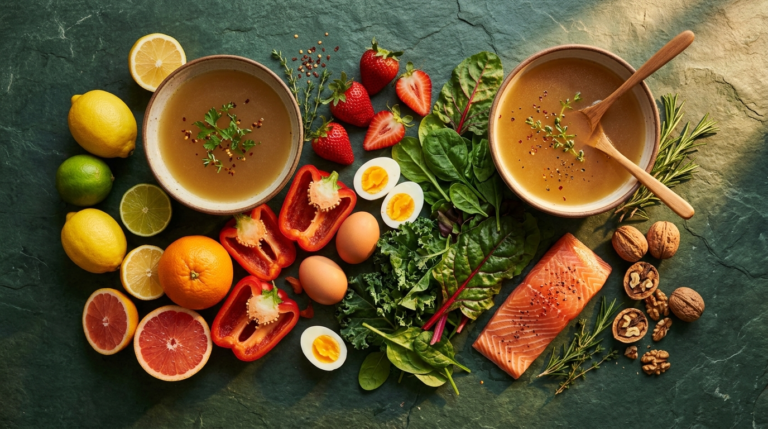
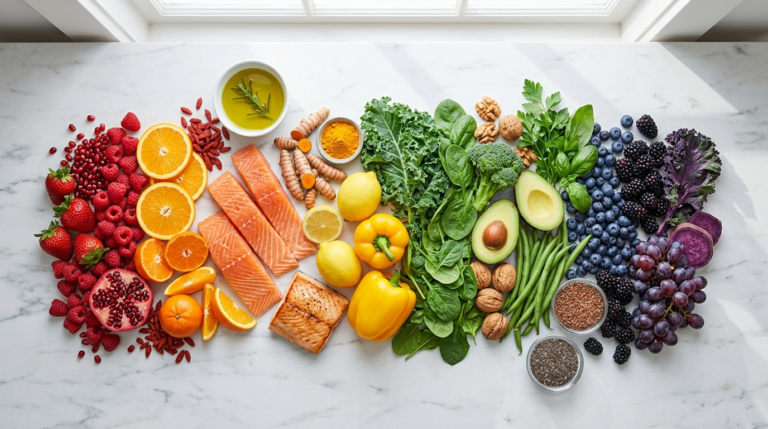
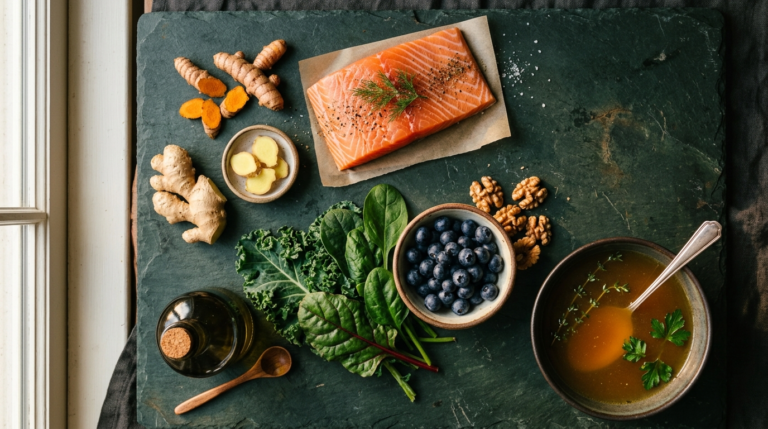
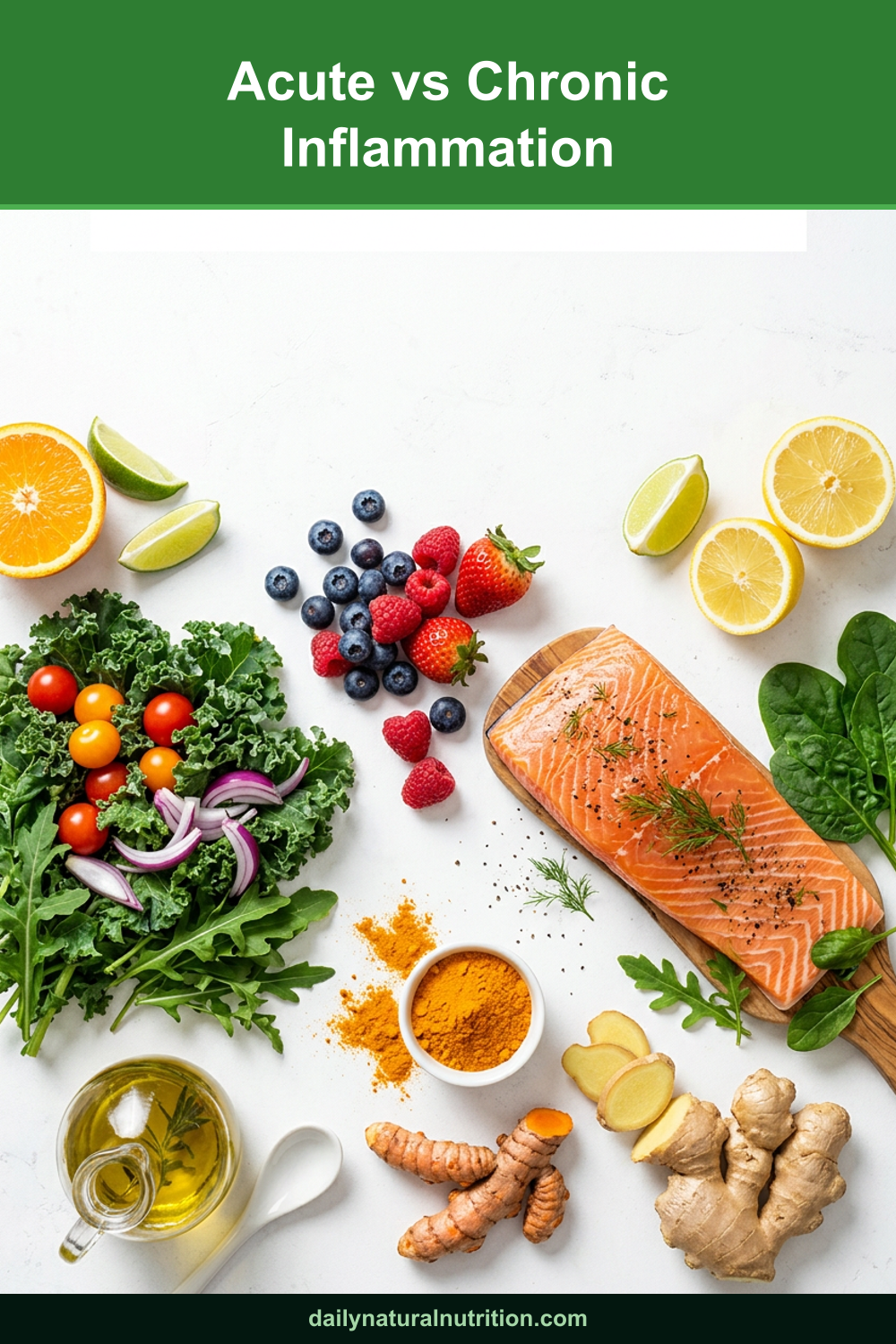
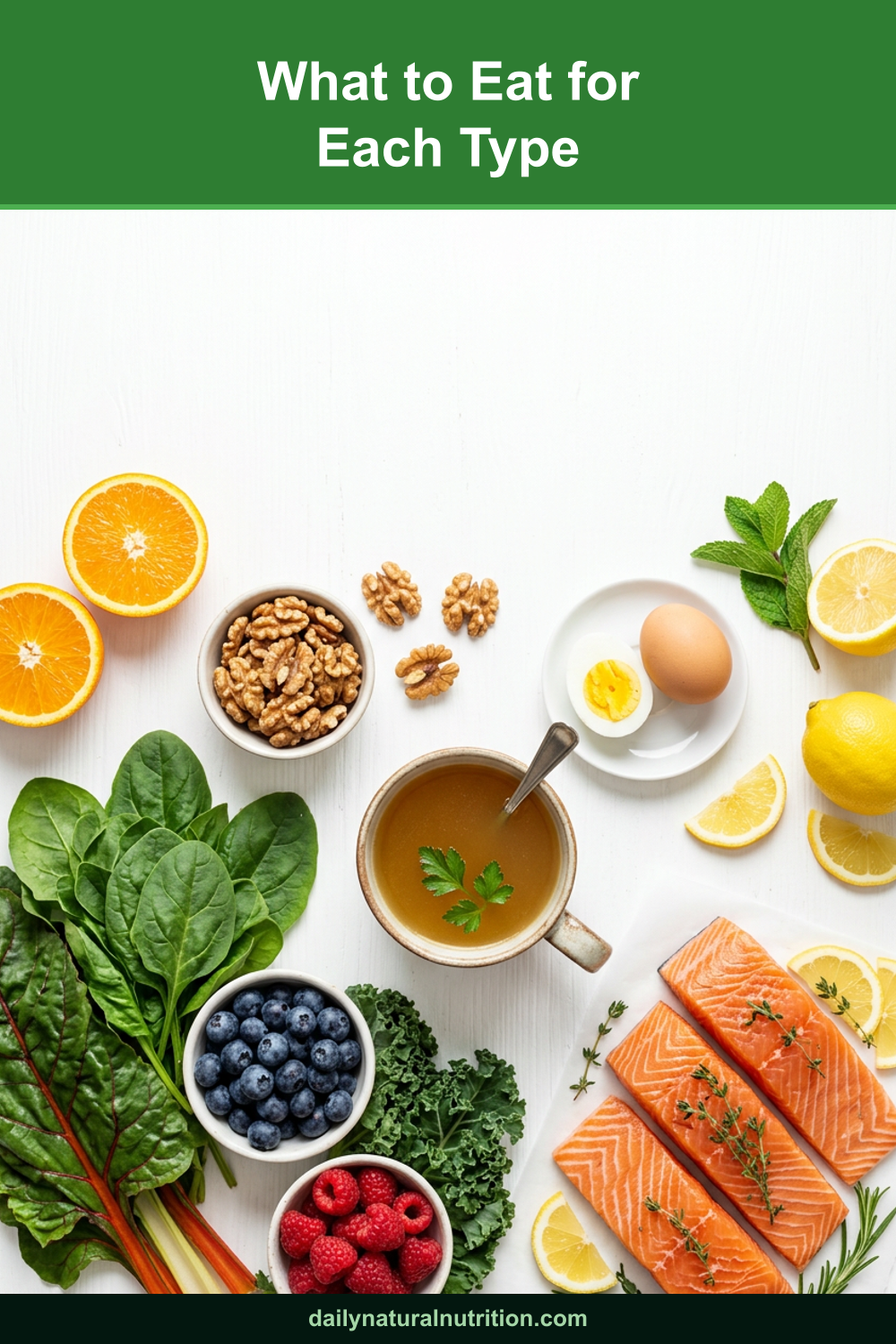
When you are recovering from an injury, illness, or flare-up, your body needs raw materials to repair tissue. Prioritize quality protein from fish, eggs, poultry, or legumes to rebuild tissue. Pile on colorful, antioxidant-rich produce like berries, citrus, and leafy greens to support the immune response. Add omega-3 fats from fatty fish and walnuts, and stay well hydrated with water and broths.
Bone broth is a traditional recovery food for good reason, supplying collagen and minerals in an easy-to-digest form. Keep meals gentle and nourishing, rest as much as you can, and let your body do its work. Food supports acute inflammation treatment, it does not replace the medical care some injuries require.
What to eat for chronic inflammation
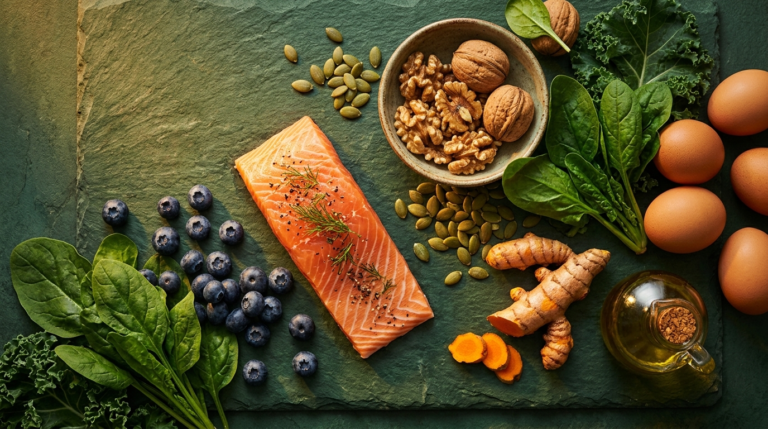
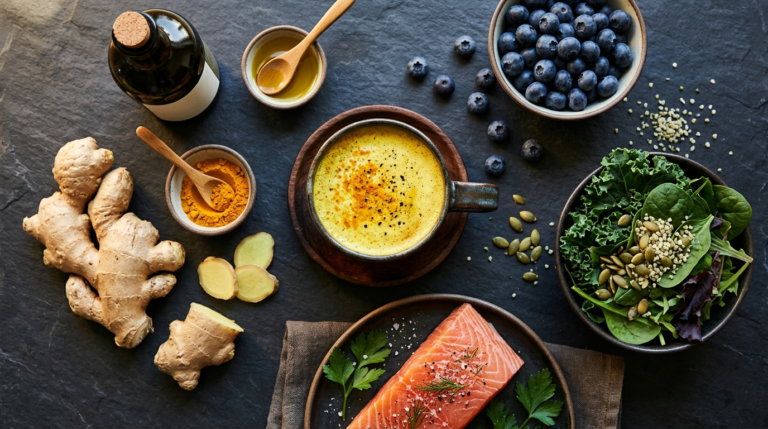
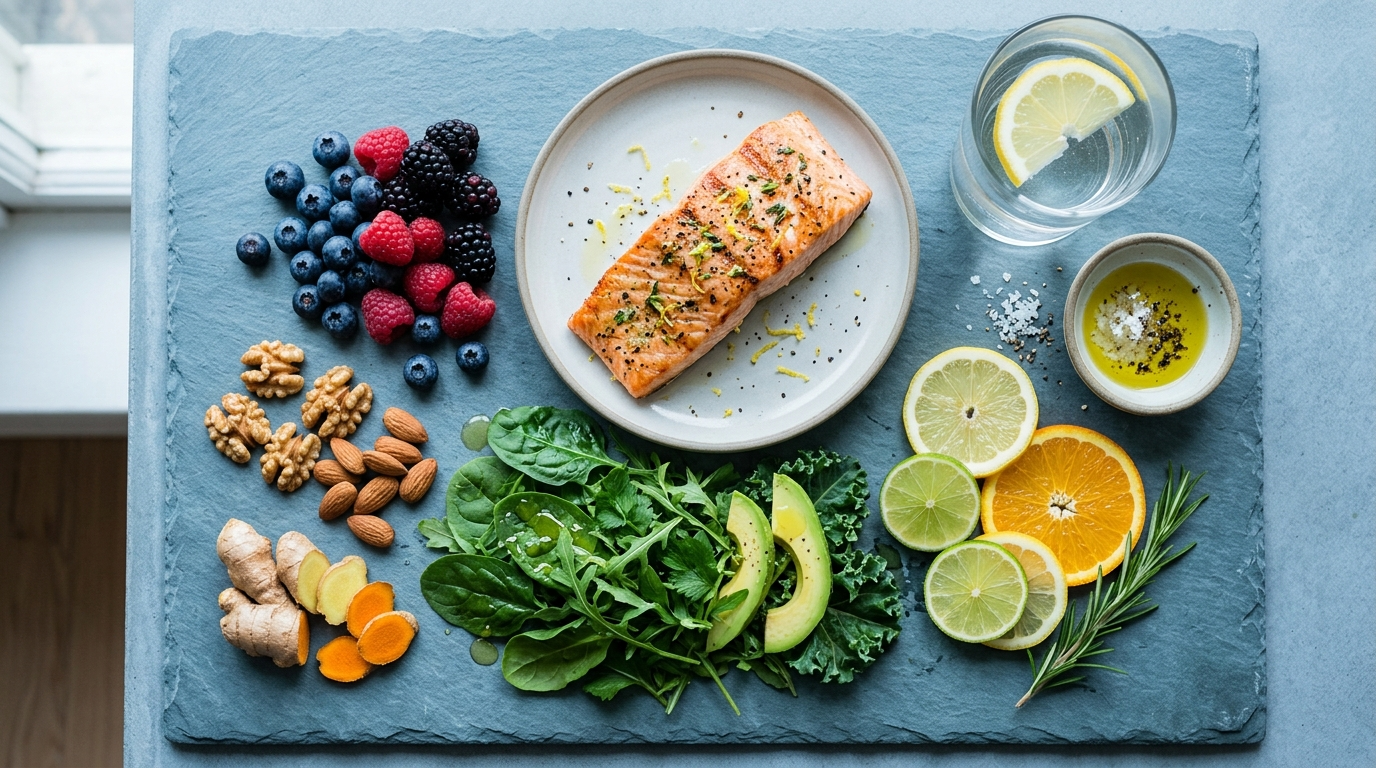
For chronic, low-grade inflammation, the strategy shifts from short-term recovery to a steady, lifelong pattern. Build most meals around vegetables, healthy fats, and quality protein. Make fatty fish a regular feature, lean on turmeric and ginger, and reach for berries and leafy greens daily. Our deep dive into the best anti-inflammatory foods for pain and swelling ranks these in detail.
The magic here is consistency, not intensity. A single perfect meal does little, but a repeatable, mostly whole-food pattern, week after week, is what gradually lowers the simmer and supports comfort, energy, and resilience.
Cellular energy, recovery, and chronic inflammation
Chronic inflammation and low energy often go hand in hand. Inside your cells, mitochondria produce the energy you run on, and inflammatory stress can wear them down, leaving you tired even after a clean diet and good sleep. Supporting cellular health is part of a complete approach to chronic inflammation.
Omega-3 fats, leafy greens, and antioxidant-rich berries all nourish your cells. When persistent fatigue lingers, a cellular energy formula such as Advanced Mitochondrial Formula (Learn More) offers optional support for the energy production that inflammation tends to drain. It is a complement to your plate, working quietly at the cellular level rather than acting as a stimulant.
Gut inflammation and what to eat
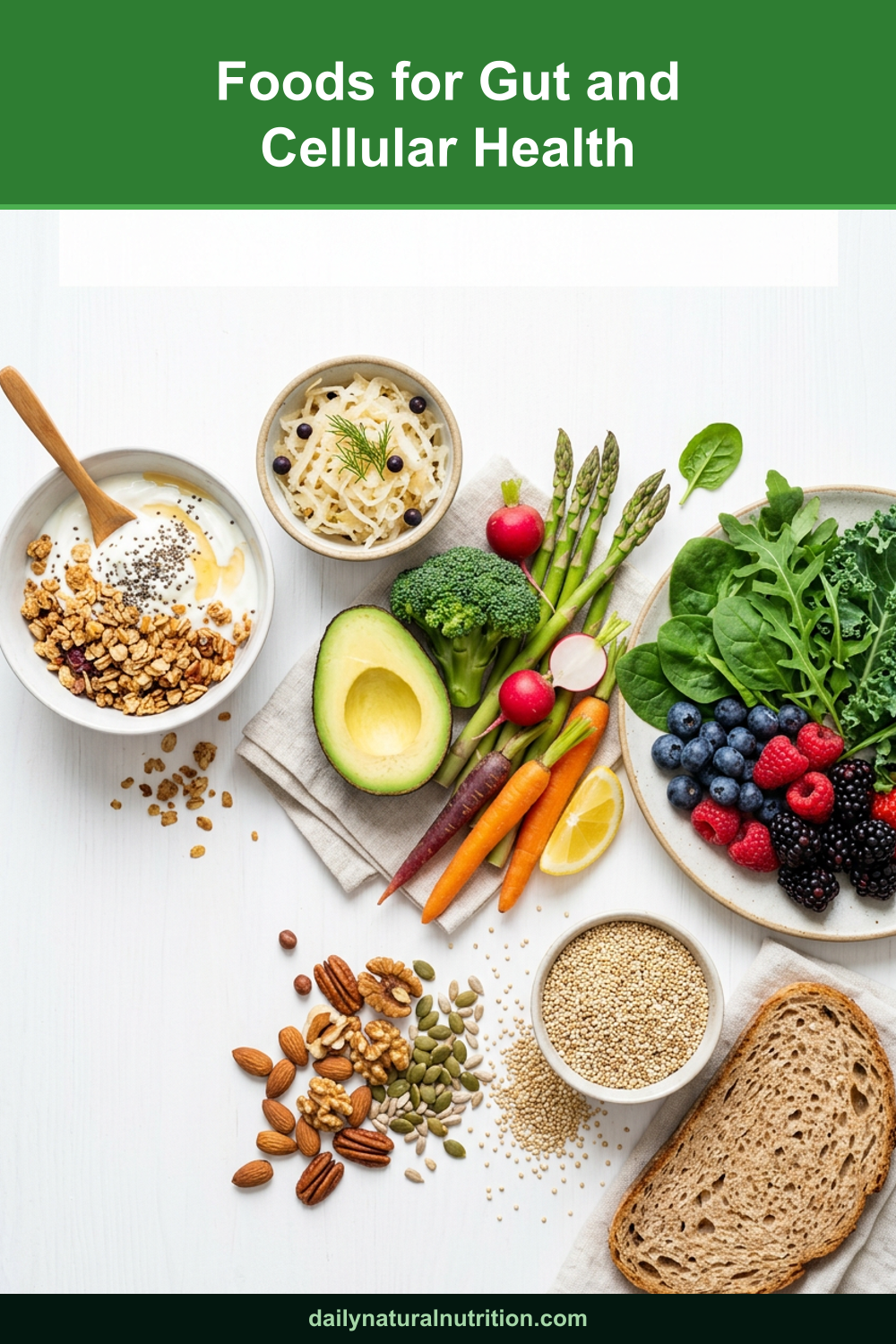
Your gut is a major hub for inflammation, since much of your immune system lives there. Bloating, irregularity, and digestive sensitivity can all reflect inflammation in the digestive tract. Fiber-rich vegetables, fermented foods like yogurt and sauerkraut, and prebiotic fibers feed the beneficial bacteria that help keep gut inflammation in check.
Many people over 50 fall short on fiber, where a gentle prebiotic like Peak BioBoost (Learn More) can help, mixing flavorlessly into coffee or water to support regularity and microbiome balance. Whole-food fiber still leads, with the prebiotic filling the gaps that a busy diet leaves behind.
Metabolic inflammation and blood sugar
There is one more piece many people miss: blood sugar. Frequent glucose spikes can promote inflammatory activity, which is why steady blood sugar is part of a complete anti-inflammatory picture, especially for adults who are less active or carrying extra weight. Fiber, protein, and healthy fats all slow those spikes naturally.
Food leads, as always. If your routine is sedentary or your blood sugar tends to swing, a formula like Blood Sugar Blaster (Learn More) offers optional support for metabolic balance and steadier energy, working alongside a whole-food pattern that limits refined sugar and processed carbohydrates.
Find your inflammation zones and build a plan
Whether you are recovering from an acute flare or managing the chronic kind, the most useful next step is to pinpoint where inflammation shows up for you and respond with the right foods. The free Anti-Inflammatory Body Builder lets you tap the areas where you feel discomfort and returns a personalized food plan in about two minutes.
From there, you can layer optional support where it fits: cellular energy with Advanced Mitochondrial Formula (Learn More), gut balance with Peak BioBoost (Learn More), and steady blood sugar with Blood Sugar Blaster (Learn More). To go deeper, browse our nutrition guides or visit our natural supplement recommendations. Understanding the difference between acute and chronic is the first step. Eating for each is how you put that knowledge to work.
Frequently asked questions
What is the difference between acute and chronic inflammation?
Acute inflammation is short-term and helpful, the redness and swelling that follow an injury and then fade as you heal. Chronic inflammation is long-term and low-grade, simmering for months or years. The first supports recovery, while the second is the kind worth calming with food and lifestyle.
Is acute inflammation bad for you?
No, acute inflammation is a normal and necessary part of healing. It helps your body respond to injury or infection, then resolves on its own. The goal is not to block it, but to support recovery with nourishing food, rest, and care, and to keep it from becoming chronic.
What should I eat to support acute inflammation recovery?
Focus on protein for tissue repair, colorful antioxidant-rich produce, omega-3 fats, and plenty of fluids. Berries, leafy greens, fatty fish, citrus, and bone broth are excellent. These foods give your body the raw materials it needs to heal while you rest, alongside any care your provider advises.
What foods help with chronic inflammation?
A steady pattern of fatty fish, leafy greens, berries, turmeric, ginger, olive oil, and fiber-rich foods helps calm chronic, low-grade inflammation. Supporting your gut and steady blood sugar matters too. Consistency over weeks and months is what makes the real difference, not any single meal.
Can food turn acute inflammation into chronic inflammation?
Diet is one factor among several. A pattern heavy in processed foods, refined sugar, and unhealthy fats can keep inflammation simmering, while whole foods help it resolve. Supporting your gut with options like Peak BioBoost and steady blood sugar can help your body return to balance.
Does blood sugar affect inflammation?
Yes. Frequent blood sugar spikes can promote inflammatory activity, which is why steady glucose matters. Fiber, protein, and healthy fats slow those spikes, and a formula like Blood Sugar Blaster offers optional support for metabolic balance alongside a whole-food eating pattern.
How do I know which type of inflammation I have?
Acute inflammation is usually obvious and tied to a recent injury or illness. Chronic inflammation is subtler, showing up as lingering aches, fatigue, or gut trouble. Mapping where you feel discomfort with a free tool can help you respond with the right foods for your situation.
Medical disclaimer: The information on this page is for educational purposes only and is not intended as medical advice. Always consult your healthcare provider before starting any new supplement or making significant changes to your diet, especially if you have existing health conditions or take medication.