Best Anti-Inflammatory Foods for Pain and Swelling
When pain and swelling flare up, your plate is one of the most powerful tools you have. The best anti-inflammatory foods supply the omega-3 fats, polyphenols, and antioxidants your body uses to calm the inflammatory signals behind sore joints, swollen tissue, and stiffness. None of this requires exotic ingredients or a complicated plan. It is mostly familiar, whole foods eaten consistently. Here is a practical, evidence-based guide to the foods that fight pain and swelling, organized so you can put them to work today.
How food fights pain and swelling
Swelling and pain are downstream of inflammation, your body’s repair response. When that response lingers as chronic, low-grade inflammation, tissues stay irritated and joints ache. Certain foods supply compounds that help dial it back, while others tend to fuel it. As Harvard Health explains in its overview of foods that fight inflammation, whole, plant-forward foods and healthy fats sit at the heart of an anti-inflammatory plate.
If you are still mapping out the bigger picture, our guide on how to reduce inflammation in the body naturally covers the lifestyle side. This article zooms in on the foods themselves, ranked by how reliably they support pain and swelling relief.
Omega-3 rich foods, the top tier
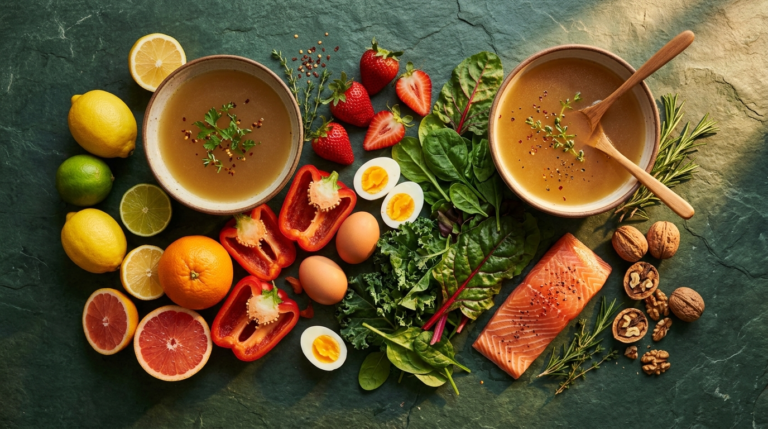
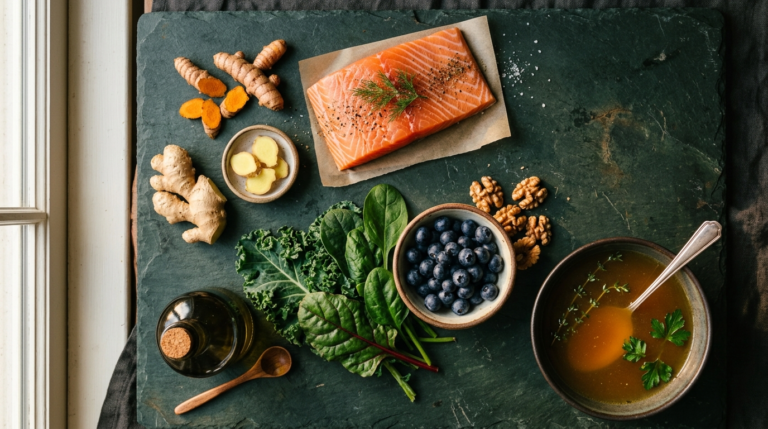
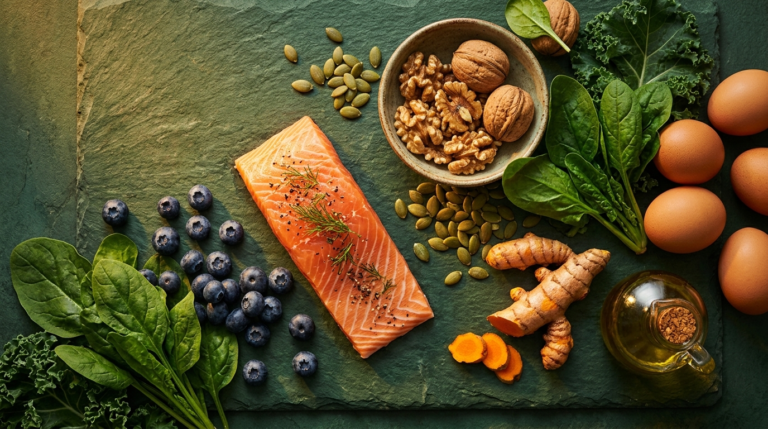
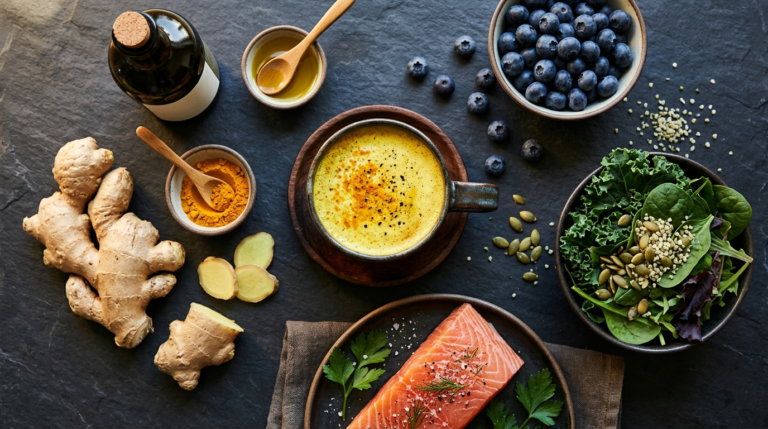
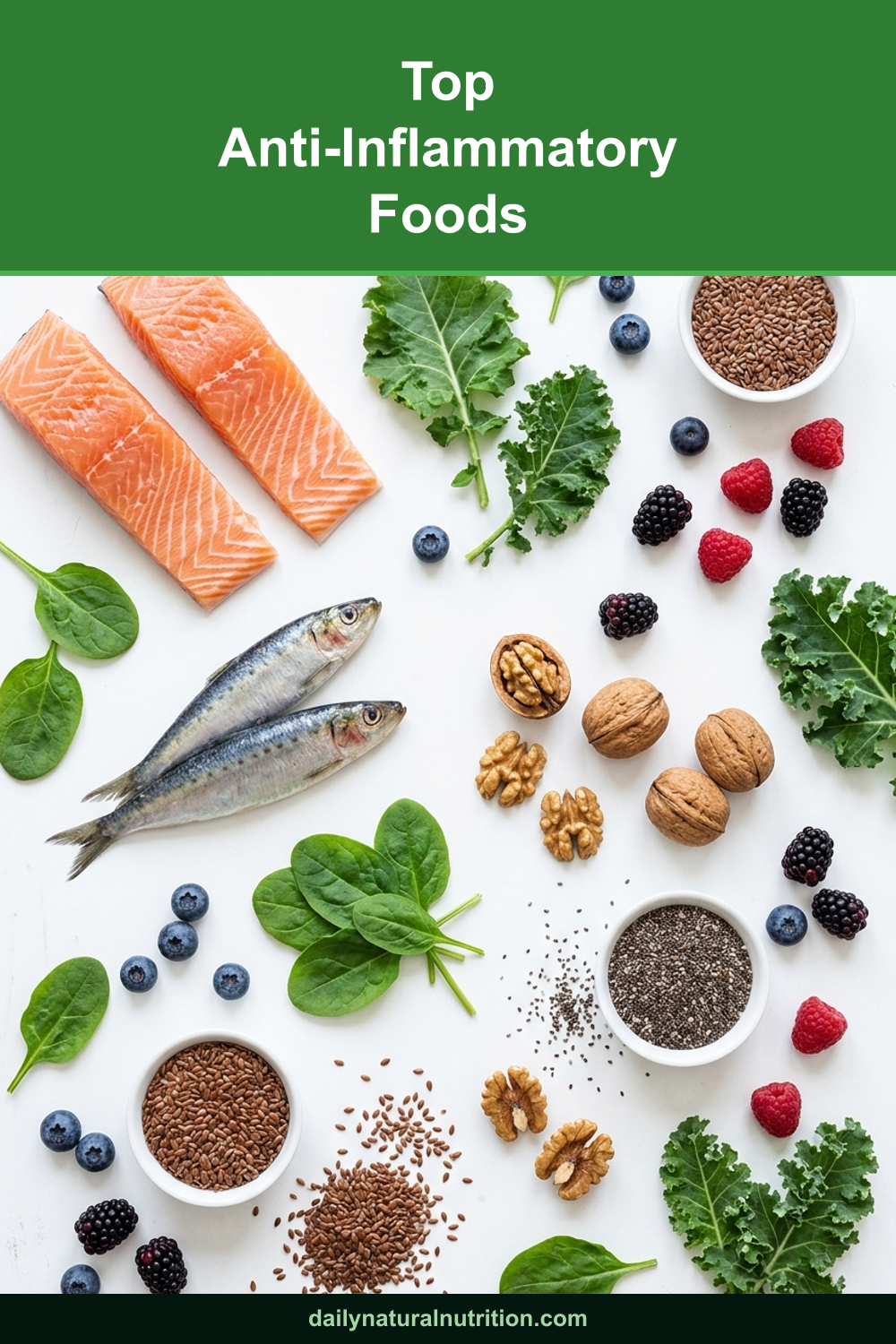
Omega-3 fatty acids are among the most studied anti-inflammatory nutrients, and foods rich in them belong at the top of your list. Fatty fish like salmon, sardines, mackerel, and trout lead the way. Plant sources like walnuts, flaxseeds, and chia seeds add more. The National Institutes of Health omega-3 fact sheet outlines why these fats matter, especially as we age.
Aim for fatty fish two or three times a week, and sprinkle ground flax or walnuts onto breakfast and salads. These fats help quiet the signals behind joint pain and swelling, making them a cornerstone of any anti-inflammatory plate.
Colorful fruits and vegetables
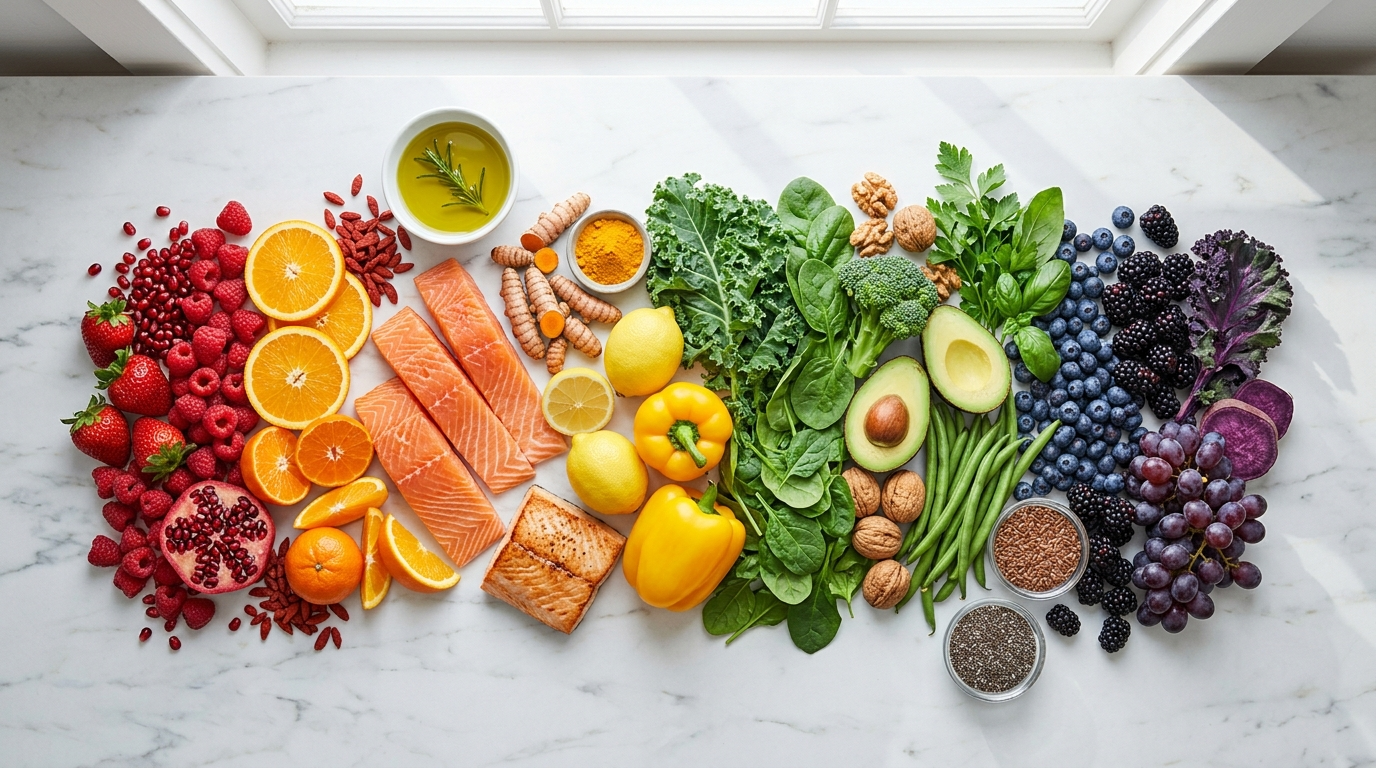
The deeper and more varied the colors on your plate, the more anti-inflammatory plant compounds you take in. Berries deliver anthocyanins, leafy greens like spinach and kale supply antioxidants and magnesium, and cruciferous vegetables such as broccoli and cabbage add sulfur compounds that support your body’s own defenses. Tart cherries deserve a special mention for post-activity soreness.
Try to fill half your plate with vegetables and reach for fruit, especially berries, as your default sweet. These foods fight the oxidative stress that accompanies swelling, and they are gentle, affordable, and easy to enjoy every single day.
Anti-inflammatory spices
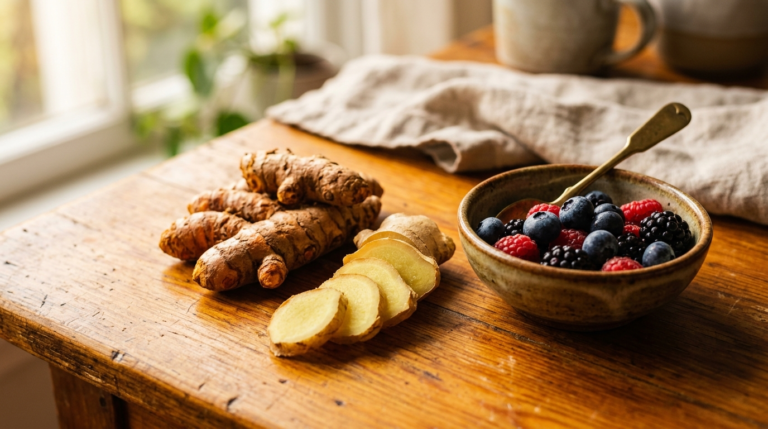
A few spices punch well above their weight. Turmeric contains curcumin, one of the most researched natural anti-inflammatory compounds, and it works even better when paired with black pepper. Fresh ginger brings its own soothing properties and is wonderful for both joints and digestion. Garlic, cinnamon, and rosemary round out a flavorful, anti-inflammatory spice rack.
Stir turmeric and ginger into smoothies, soups, and roasted vegetables. Small daily additions add up, and they make anti-inflammatory eating genuinely delicious rather than a chore.
Collagen-rich foods for joints and connective tissue
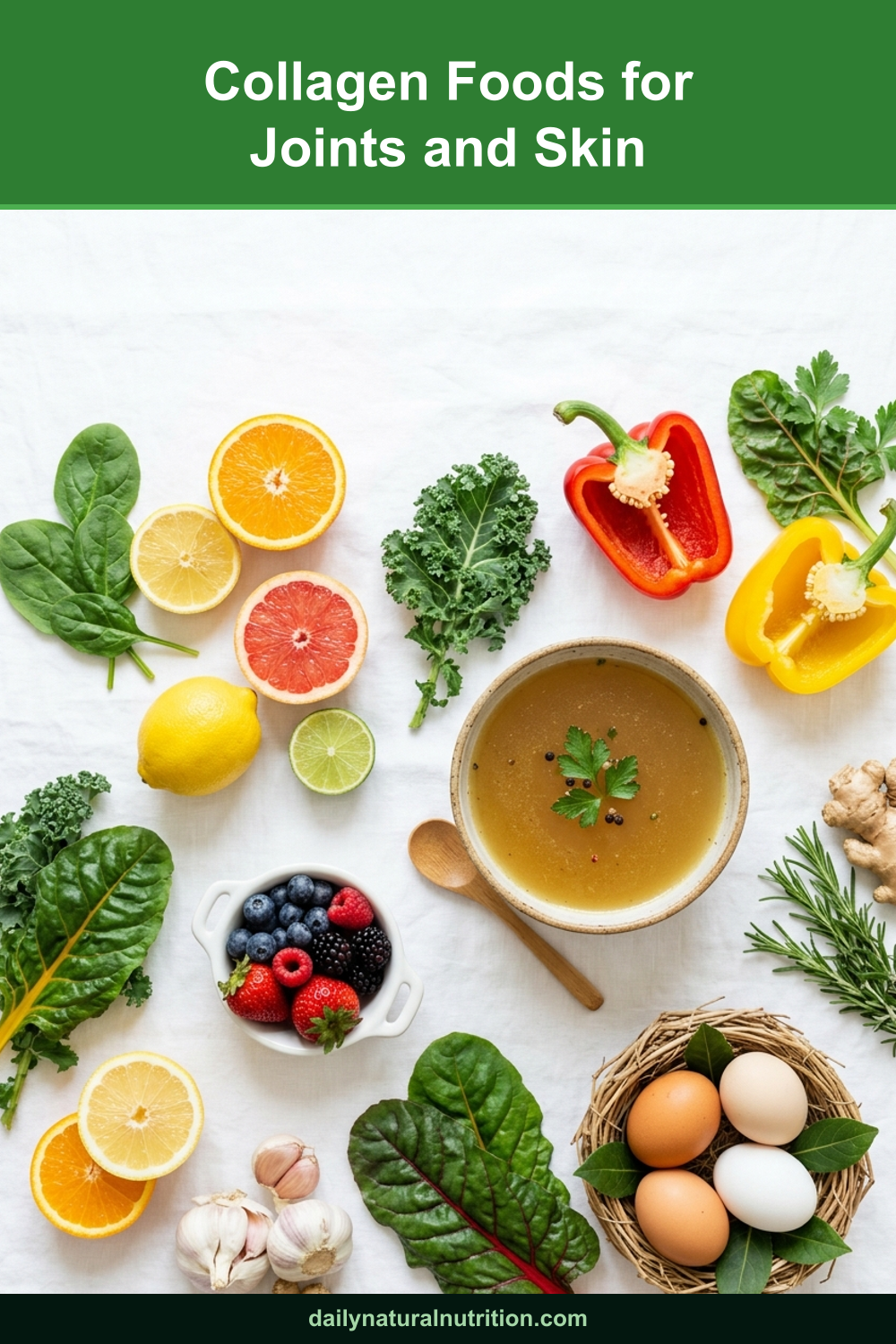
Pain and swelling often involve the connective tissue that cushions your joints, and collagen is its main building block. Bone broth is the classic collagen-rich food, and pairing vitamin C foods like citrus and bell peppers with protein helps your body make its own collagen. After 40, natural collagen production declines, which is why this category matters more with age.
Food leads, but if you want focused help for joints, skin, and the gut lining, a multi-type collagen formula such as Advanced Collagen Plus (Learn More) offers optional support that mixes easily into coffee or a smoothie. Think of it as a complement to bone broth and vitamin C foods, helping you shore up the connective tissue that keeps you comfortable and mobile.
Protein foods that fight inflammation and muscle loss
Adequate protein does double duty. It helps preserve the muscle that supports and protects your joints, and lean protein sources crowd out the processed foods that fuel inflammation. Fatty fish counts here too, along with eggs, poultry, legumes, and Greek yogurt. After 50, the body becomes less efficient at building muscle, so getting enough quality protein becomes especially important.
Whole-food protein comes first, and an amino acid formula like Advanced Amino Formula (Learn More) can offer optional support for muscle preservation when meeting your needs through food alone is a challenge. Stronger muscles mean better-supported joints, which is part of why protein belongs in any plan for pain and swelling.
Foods organized by where your pain is
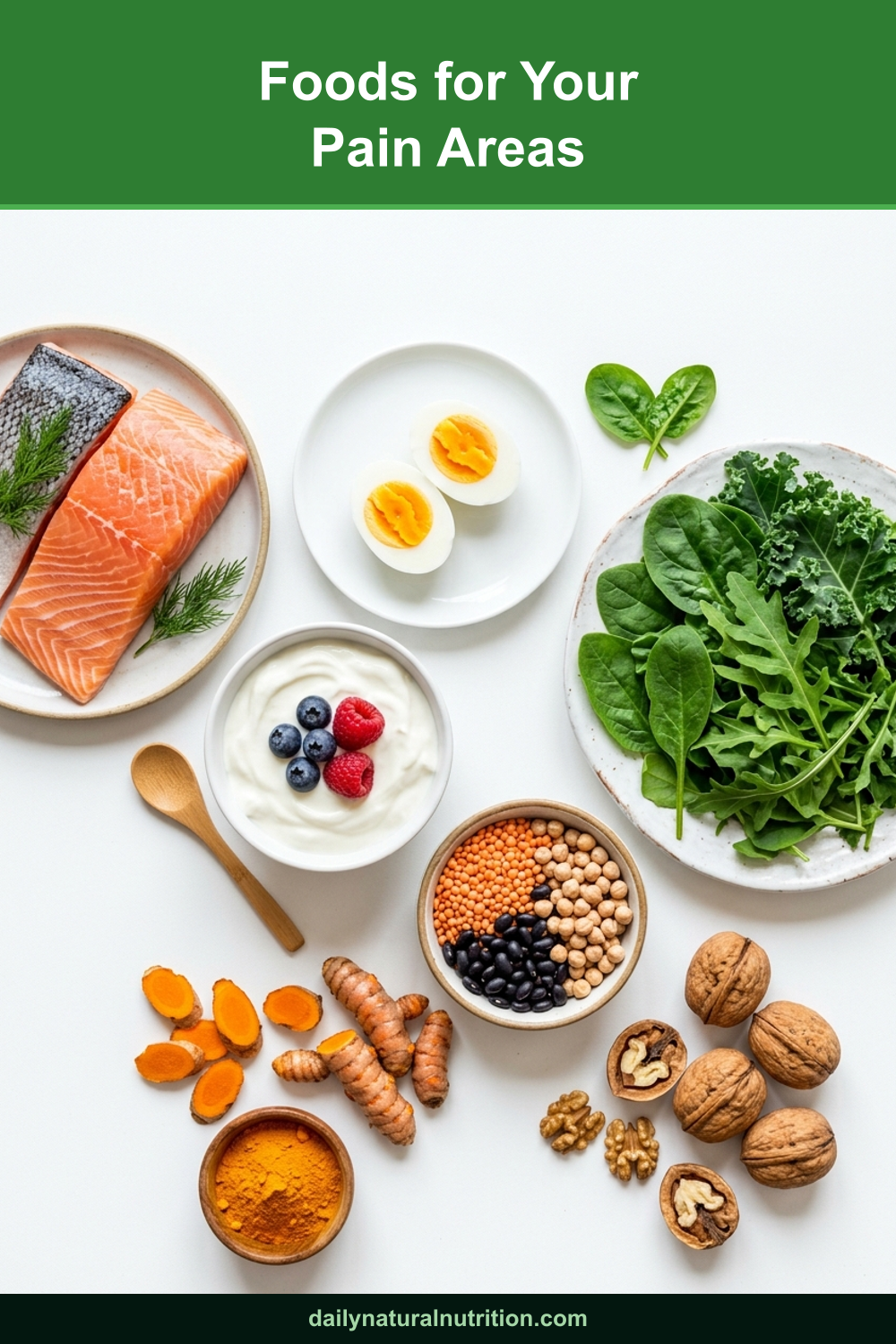
Not all pain calls for the same foods, which is the whole idea behind eating with intention. Knees, hips, and hands lean on collagen-rich and omega-3 foods. The gut leans on broth, fiber, and fermented foods. The spine and lower back draw on magnesium-rich foods. Matching foods to your specific aches makes your plate far more effective than a generic list.
This is exactly what the free Anti-Inflammatory Body Builder does. You tap where it hurts, answer four quick questions, and receive a personalized food plan in about two minutes. For joint-focused pain in particular, your results may also surface optional support like JointVive (Learn More) to complement the joint-friendly foods on your plate.
Foods to limit for less pain and swelling
What you leave off the plate matters too. Heavily processed foods, sugary drinks, refined carbohydrates, fried foods, and excess alcohol tend to push inflammation upward. You do not need to eliminate them entirely or chase perfection. Simply tilt the balance, most days, toward whole and colorful and away from ultra-processed. If you are noticing ongoing symptoms, our guide to inflammation symptoms worth paying attention to can help you connect the dots.
A simple anti-inflammatory day
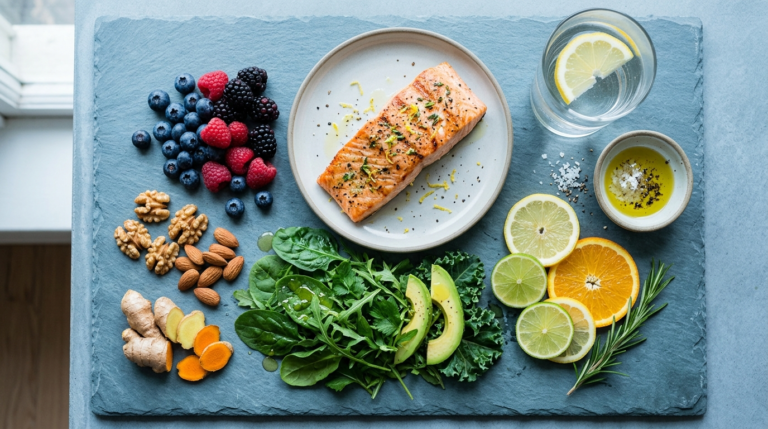
Here is how these foods come together across one easy day. Breakfast could be a berry and leafy green smoothie with ground flax, with a scoop of collagen like Advanced Collagen Plus (Learn More) stirred in to support joints and skin. Lunch might be a salmon salad over greens with olive oil and walnuts, a protein-rich meal you can round out with amino support such as Advanced Amino Formula (Learn More) on days when food alone falls short.
Dinner could be a turmeric and ginger fish with roasted vegetables, and a snack might be tart cherries with almonds. Cap the day with a gentle walk to keep your joints moving, and pair it with joint support like JointVive (Learn More) if stiffness tends to slow you down. Notice the pattern: omega-3 fats, color, and spices at every meal, with optional support layered exactly where you need it.
Build your personalized anti-inflammatory food list
The best anti-inflammatory foods are the ones you will actually eat, matched to the areas that bother you most. Start with the omega-3 foods, colorful produce, and spices above, then layer in collagen and protein support for joints and muscle. To go deeper on specific foods, browse our nutrition guides, and when you want complementary support, visit our natural supplement recommendations.
For a plan made for your body, open the Anti-Inflammatory Body Builder and let it turn this list into targeted meals. Eat the rainbow, lean into healthy fats and spices, and let consistency quietly carry you toward less pain and swelling.
Frequently asked questions
What are the best anti-inflammatory foods?
Fatty fish, leafy greens, berries, turmeric, ginger, extra virgin olive oil, walnuts, and bone broth top the list. They supply omega-3 fats, polyphenols, and antioxidants that calm inflammation. A consistent pattern of these whole foods works far better than any single meal or quick fix.
Which foods are best for pain and swelling?
For pain and swelling, lean on omega-3 rich fish, tart cherries, turmeric, ginger, and dark leafy greens. Collagen-rich bone broth supports connective tissue, while colorful produce fights the oxidative stress behind swelling. Build most meals around several of these and stay consistent for the best results.
Do anti-inflammatory foods really reduce swelling?
Research links anti-inflammatory eating patterns with lower inflammatory markers and reduced joint pain and stiffness over time. Food works gradually rather than instantly, so think of it as steady, daily support. It complements, and does not replace, medical care for significant or persistent swelling.
What foods make inflammation worse?
Heavily processed foods, sugary drinks, refined carbohydrates, fried foods, and excess alcohol tend to push inflammation upward. You do not need to be perfect. Simply tilt the balance most days toward whole, colorful foods and away from ultra-processed ones, and your body will respond.
Can collagen and protein foods help joints and muscle?
Yes. Collagen-rich foods like bone broth support the connective tissue that cushions joints, and a formula such as Advanced Collagen Plus can add optional support. Protein-rich foods help preserve muscle, where Advanced Amino Formula offers complementary support for strength after 50.
How much of these foods should I eat?
Aim to build most meals around vegetables and healthy fats, include fatty fish two or three times a week, and add berries, nuts, and anti-inflammatory spices daily. Consistency matters more than precise amounts, so focus on a steady, colorful pattern you can maintain.
How do I know which anti-inflammatory foods I need most?
It depends on where you feel pain or swelling. Joints, gut, and muscles each respond to slightly different foods. A free tool like the Anti-Inflammatory Body Builder maps your specific concerns to targeted foods and meals, so you can focus your plate where it matters most.
Medical disclaimer: The information on this page is for educational purposes only and is not intended as medical advice. Always consult your healthcare provider before starting any new supplement or making significant changes to your diet, especially if you have existing health conditions or take medication.